
Use, Care and Safety
Red Light Safety, Eye Protection, and When to Pause
Inspect the mat, controller, cable, and adapter before every session; follow the exact product’s eye-protection instructions; keep liquids away; and stop for unusual heat, persistent redness, blistering, pain, or eye symptoms. The manual limits each session to 90 minutes. Ask a clinician before use when pregnancy, photosensitivity, eye disease, cancer treatment, or photosensitizing medication is relevant.
In this guide
Safety starts with the device condition, eye guidance, and a clear stop rule.
- Inspect before every session
- Follow the exact product’s eye-protection instructions
- Stop for damage, uncontrolled heat, or an unexpected reaction
Evidence snapshot
Do not interpret the longest timer as the best or required session.
No serious events occurred, but blistering and prolonged redness appeared at the highest exposures.
The trial irradiated a small forearm area for three weeks, not a full-body home mat.
01
A 30-second pre-session check
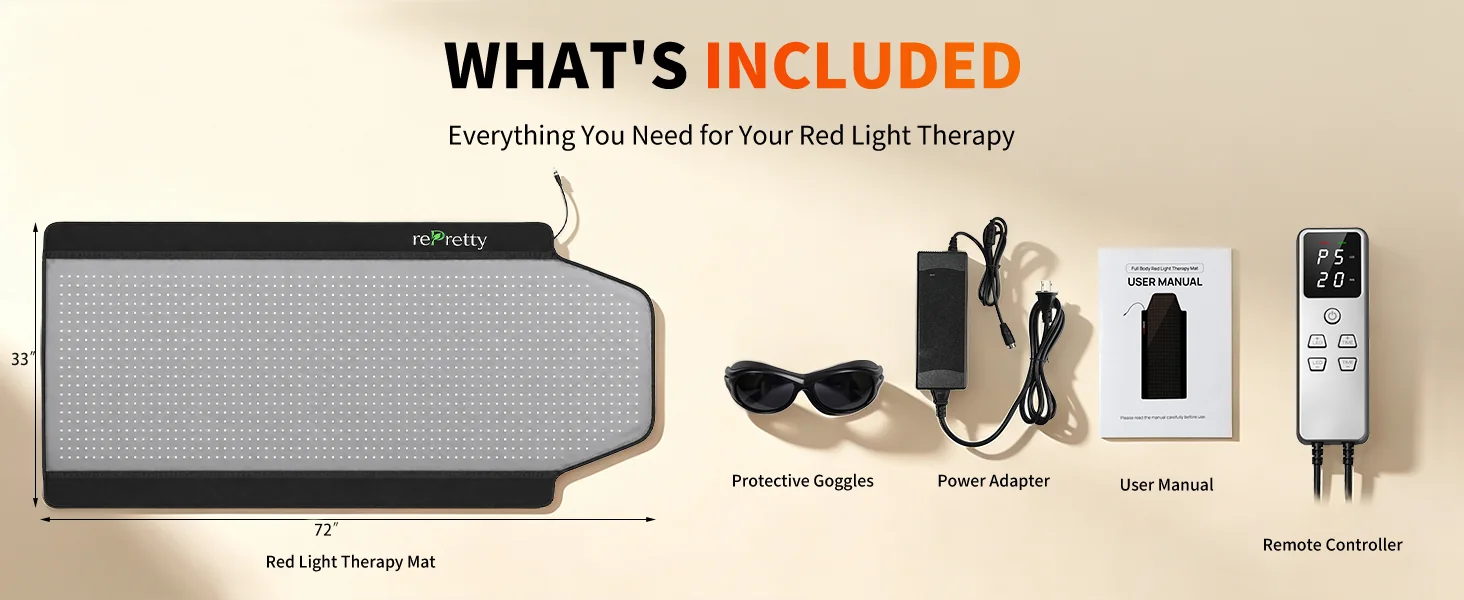
Do not use the mat when the cable, connector, controller, adapter, or surface is damaged, wet, unusually hot, or unreliable. Keep liquids away and use only the supplied controller and adapter. Do not use while sleeping, unconscious, or unable to operate the controls safely.
- Surface dry and free from punctures or open electrical damage.
- Cable and connectors secure, not crushed or frayed.
- Controller responds normally and remains within reach.
- No creams or ointments that contain heat-producing ingredients.
- No open or fresh wounds under the treatment area.
02
Eye protection and face use
Do not stare directly into the LEDs. Eye-protection requirements vary by device and format, so follow the instructions for the exact product and do not assume eyewear is included.
People with an eye condition, a history of retinal disease, light-triggered migraine, or unexplained visual symptoms should ask an eye-care professional before beginning.
03
Conditions and medications that need individual advice
Ask a qualified clinician before use if you are pregnant, have a photosensitive condition, are receiving cancer treatment, have a suspicious skin lesion, or take medication or supplements known to increase light sensitivity. The clinician should review the actual medication and device, not make a decision from a generic internet list.
Do not use on infants. Children should not use the device without adult supervision.
04
What controlled skin-safety trials found
Two randomized dose-escalation trials exposed the forearm skin of 115 healthy adults to 633 nm red light three times weekly for three weeks. No serious adverse events occurred, but dose-limiting blistering or prolonged redness occurred at 480 J/cm2 in one participant and at 640 J/cm2 in two participants.
Those exposures were unusually high and applied to a small controlled area. They show why more time and more energy should not automatically be treated as safer or better, but they do not define a dose for the rePretty Mat.
05
Stop the session when
Stop immediately for pain, blistering, strong or persistent redness, eye pain, visual disturbance, dizziness, shortness of breath, uncontrolled heat, burning odor, liquid exposure, or unreliable controls. Disconnect power before inspecting the device and seek appropriate medical or product support.
References
Sources
- 01Safety of Light Emitting Diode-Red Light on Human Skin
Two high-fluence dose-escalation trials with 115 healthy adults.
- 02American Academy of Dermatology: Red Light Therapy Safety
Consumer safety, device quality, medication, and eye questions.
- 03Cleveland Clinic: LED Light Therapy
General risks, at-home use, and when to seek professional advice.
- 04rePretty Full-Body Red Light Therapy Mat
Current device precautions, goggles, electrical safety, and 90-minute session limit.
Continue learning
Related guides
Use the next guide to answer the practical question that follows from this one.
Need a format starting point?