
Red Light Basics
How Long and How Often to Use a Red Light Therapy Mat
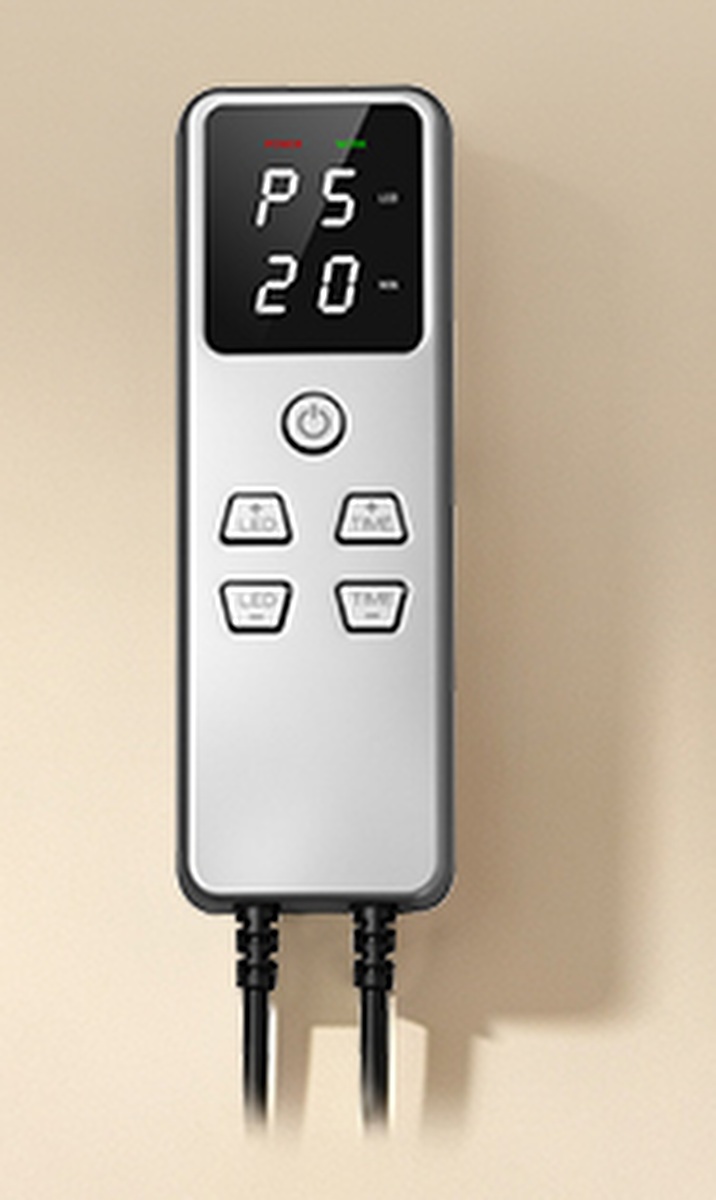
For the current rePretty Mat, begin with 10 minutes at P1 or P2, three times in the first week. If those sessions are comfortable, progress to 15 or 20 minutes, three to five times weekly. The manual caps a session at 90 minutes, which is a maximum rather than a target. Increase only one setting at a time and keep the routine comfortable enough to repeat.
In this guide
Start with a simple routine, then adjust it gradually.
- A clear first-week schedule
- How to increase time or level
- When to pause and review your setup
Routine snapshot
Use the lower settings while you learn the controls and how the routine feels.
Space the sessions out and keep the mode consistent before changing anything.
The longest timer setting is a ceiling in the manual, not a recommended starting duration.
01
How long should a beginner use the rePretty Mat?
Use 10 minutes at P1 or P2 for the first session. Complete three spaced sessions in the first week. If they are comfortable, progress to 15 or 20 minutes, three to five times weekly. Change only one variable at a time and keep the controller within reach.
Do not begin with the longest timer, stack several long sessions in one day, or increase time and power together. The manual's hard ceiling is 90 minutes per session, not a target.
02
How to increase time or level
Complete three spaced sessions at 10 minutes and P1 or P2 before changing the routine. If those sessions are comfortable, increase either the duration to 15 or 20 minutes or move up one level. Do not increase both at the same time.
Keep the same mode while you make that change, and give yourself more than one session before deciding whether the new setting fits. A routine that is easy to repeat is more useful than one built around the highest available setting.
03
More is not automatically better
PBM research describes biphasic dose responses: a low dose may be insufficient, a middle range may produce a response, and a higher dose can be less effective or inhibitory. The useful range depends on the tissue, outcome, and protocol.
That is why the highest power level and longest timer should not be treated as the advanced or best routine.
04
When to pause and review your setup
Stop the session if the mat, controller, cable, or adapter behaves unexpectedly, or if you notice unusual heat, persistent redness, blistering, pain, or eye symptoms. Check that the mat is flat on a dry supported surface and that the correct adapter is connected.
Follow the eye-protection and precaution instructions for the exact product. See the dedicated safety guide for the full checklist and situations that may need professional guidance.
Decision table
A conservative progression
Keep the routine simple enough to observe comfort before increasing anything.
References
Sources
- 01Biphasic Dose Response in Low Level Light Therapy
Why increasing dose does not guarantee a larger response.
- 02Effects of Near-Infrared Light on Well-Being and Health
850 nm, 5 mW/cm2 peak irradiance, three fluence levels, and a four-week home protocol.
- 03Safety of Light Emitting Diode-Red Light on Human Skin
High-fluence 633 nm examples showing how irradiance and time combine.
- 04Photobiomodulation Therapy: A Proposed Method to Record Parameters
Parameter reporting needed for reproducible PBM protocols.
Continue learning
Related guides
Use the next guide to answer the practical question that follows from this one.
Need a format starting point?